
Back to Quizzes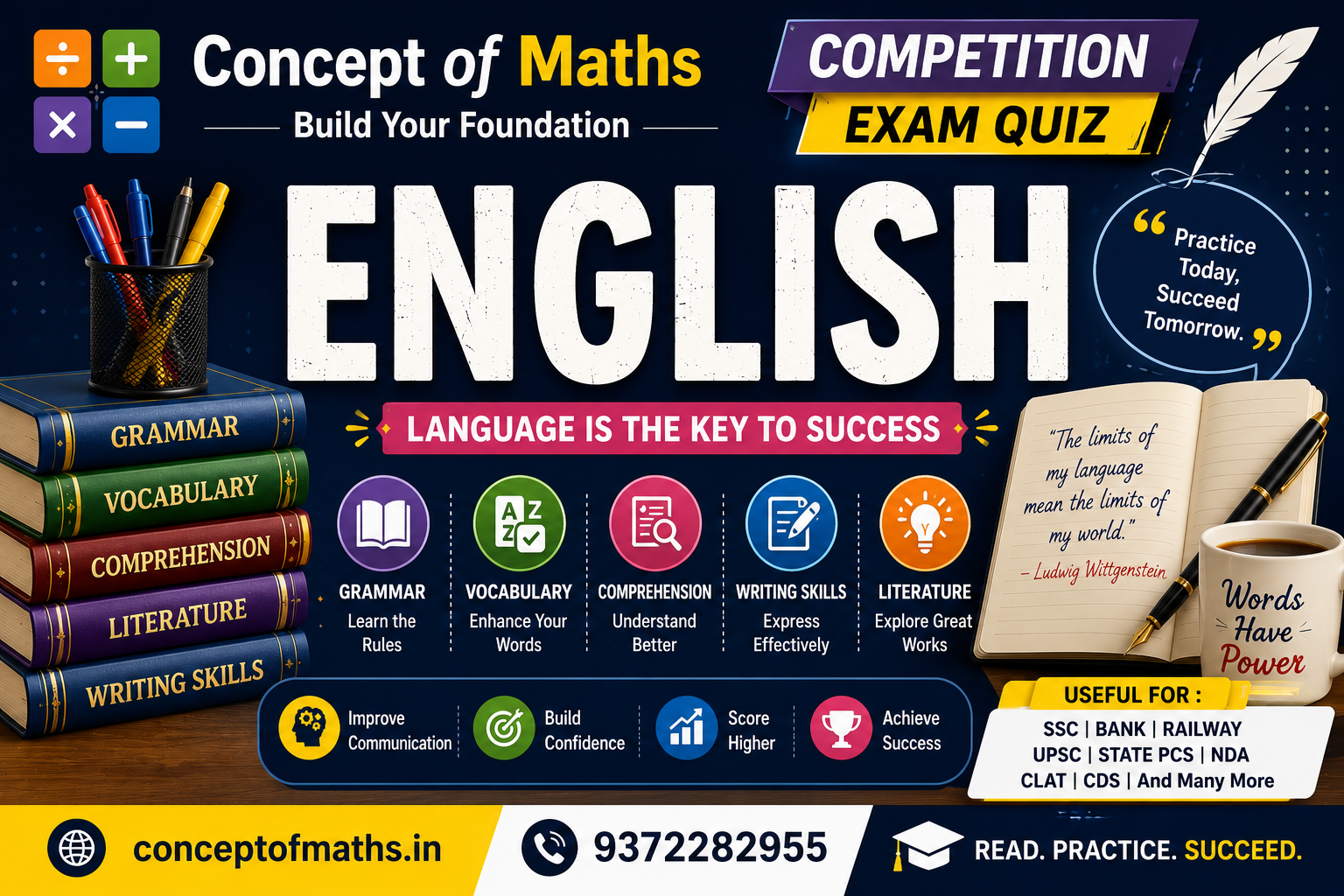
Official CBT Format
Interactive Exam Simulator
Competitive Exams : English Language - Cloze Test
Master advanced Cloze Tests for competitive exams with our interactive 10-question practice set, featuring contextual vocabulary and detailed syntax explanations.
Total Questions
10 Qs
Time Allowed
15 Mins
Marking Scheme
+1.0 / -0.25
Examination Instructions:
- Questions will be displayed one at a time with instant option selection.
- Each correct answer awards +1.0 mark. Incorrect answers deduct -0.25 marks.
- You can use the Question Palette to jump between questions or bookmark them using Mark for Review.
- Full score summary, time analytics, and step-by-step mathematical solutions are revealed after you finish the test.
Discussion 0
Rating & Discussion Locked
Please complete this quiz to share your star rating, submit your feedback, and join the discussion.